Cuma · 9 Ekim 2026 · 13.30
Spectral Graph Learning Beyond Message Passing: Theory, Contrastive Learning, and Applications to Computational Biology, Trustworthy AI, and Graph LLMs
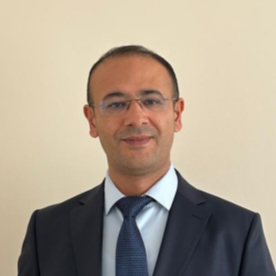
Doç. Dr. Mustafa Coşkun
Ankara Üniversitesi, Yapay Zekâ Bölümü
Özet (İngilizce)
Graphs naturally represent many complex systems, from biological interaction networks to social and information networks. Although Graph Neural Networks (GNNs) have achieved remarkable success, their performance critically depends on the design of graph convolution operators. Existing spectral GNNs often rely on simple filters or learned polynomial coefficients, limiting their ability to capture complex graph structures. Moreover, constructing expressive spectral filters is computationally challenging due to the numerical instability of conventional polynomial approximation methods.
In this talk, I will present a unified spectral graph learning framework based on Arnoldi orthonormalization that enables stable polynomial interpolation of arbitrary spectral graph filters. This framework efficiently incorporates sophisticated filters—including heat kernels, random walks, and beta kernels—into graph neural networks and graph contrastive learning. I will also introduce ArnoldiGCL, which leverages learnable spectral filters to generate expressive graph views, achieving state-of-the-art representation learning on both homophilic and heterophilic graphs.
The primary application of this framework is single-cell proteomics, where noisy measurements, missing values, and imperfect cell-to-cell similarity graphs pose significant challenges for cell type identification. I will present scProfiterole, a graph contrastive learning framework that combines Arnoldi-based spectral filtering with biologically meaningful graph filters to improve clustering of single-cell proteomic data. Experimental results demonstrate that carefully designed spectral filters substantially improve robustness and clustering accuracy compared to conventional graph convolution methods.
I will also briefly discuss how the same spectral learning framework extends to trustworthy AI, including anomaly detection in multi-relational graphs through CaRgo, where adaptive spectral filters improve the detection of fraudulent and anomalous behavior in noisy, heterogeneous networks. Finally, I will present my ongoing research on Graph Retrieval-Augmented Generation (GraphRAG), which integrates graph representation learning with large language models to improve knowledge retrieval, multi-hop reasoning, and question answering over structured and heterogeneous graph data.
Overall, this talk demonstrates how advances in spectral graph learning provide a unified and scalable foundation for graph representation learning, with applications spanning computational biology, healthcare, cybersecurity, trustworthy artificial intelligence, and graph-based retrieval-augmented generation.